Share This

Showing posts with label Blockchain. Show all posts

Wednesday, 1 July 2026

M’sia in good position to adopt AI


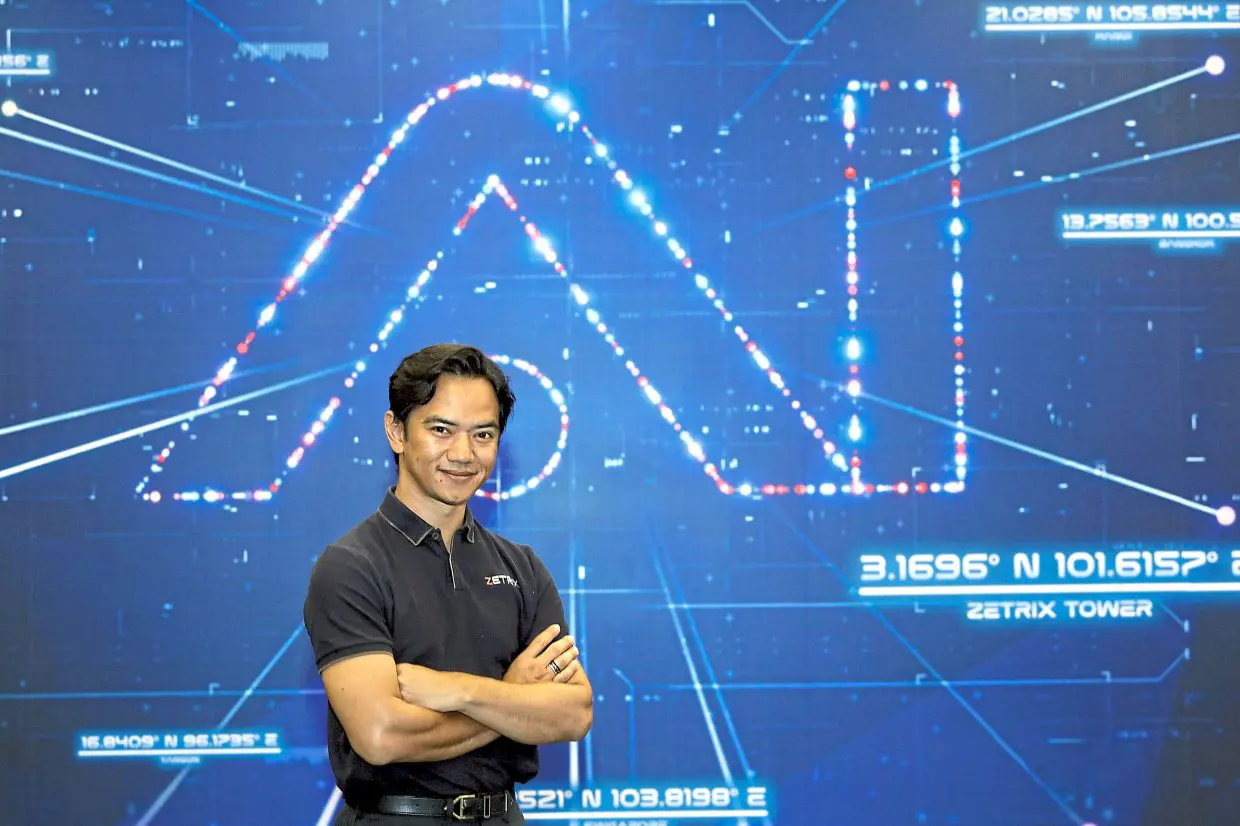
Zetrix co-founder Datuk Fadzli Shah Anuar

PETALING JAYA: With its own recent ambitious foray into the world of artificial intelligence (AI) and blockchain, Zetrix AI Bhd believes Malaysia is well-positioned to adopt and adapt to the fast-moving world of AI technology, and potentially reap economic benefits from the evolution.

Datuk Fadzli Shah Anuar, co-founder of Zetrix, the group's layer-1 blockchain platform, believes the country’s way forward lies not directly from its influx of its data centre (DC) pipeline, but more in how it enables its current workforce to improve productivity as the adoption of AI and high-level technology becomes more prevalent.

The issue is all the more relevant, given Malaysia’s seemingly continuous grapple with the issue of stagnating wages and increasingly higher cost of living.

In an exclusive interview, Fadzli acknowledged that while the government’s sanctioning of the DC influx represents its willingness to get on the tech bandwagon, the presence of DCs themselves will not translate into significant employment opportunities, especially given its highly skilled barrier of entry.

“In fact, while the adoption of AI and blockchain as a whole will mean jobs will be created, we see tasks will also be taken by non-humans, particularly a large portion of repetitive tasks that need to be done reliably and transparently,” he said.

Fadzli further explained why the group has forged several government-backed partnerships with Chinese entities, primarily focusing on AI innovation, blockchain interoperability, cross-border trade facilitation, digital identity and data trading.

With China being a significant economic and trade partner for Malaysia, he reiterated that Zetrix AI’s belief that much of China’s industrial and end-user behaviour will translate to some form of variant in this country, remarking: “Malaysia will follow similar growth and adoption cycles.”


Citing the recent trend of one-person companies or OPCs in China, with a single entrepreneur utilising multiple AI agents in delivering a service, Fadzli expects more tech-savvy youths adopting this business model.

He observed this as a form of job creation, commenting that Malaysia is well positioned to embrace this approach.

“This example will show that the current workforce can use AI and technology to become even more effective within its current roles, and perhaps we will see a tectonic shift of job roles.

“Businesses will move dynamically, a simple but huge departure from how things were previously, and we see Malaysia adopting such technology addictively,” he noted.

Nevertheless, Fadzli recognised the trust challenges that come with widespread AI and tech adoption, especially in maintaining service dependency and data privacy trust.

He believes there are three facets to building digital trust, namely, the reliability of the service rendered, data protection and the assurance that there will be no leakage of information, and the certainty that the parties dealing with each other know exactly who they are transacting with.

“We see that with the use of AI agents, not only can everything be done very accurately but also securely, because it will all be based on data packets. So for that, we believe that over the long term (AI), the agent-to-agent economy will be a commonplace occurrence,” said Fadzli.

As to how reality plays out this adoption, he is betting that it will change the way the public consume everyday services, from booking a car, ordering products online to even eCommerce, with AI agents securely matching orders to personal profiles.

Furthermore, he feels as applications become simpler for higher utilisation among the public, due to faster iteration cycles, there also needs to be user acceptance and awareness, and the necessity to marry digital identities (such as Malaysia’s MyDigital ID) with ever-growing technologies to ensure better data privacy and prevent scams.

With China and Asean being economies with somewhat different profiles, Fadzli conceded that there is no straightforward answer to this question.

He emphasised that China, due to the sheer size of its population and economy, can set standards, but it does not represent cluster economies which are interdependent as a trading bloc such as Asean.

“In our view, Asean is opportunistically a good showcase of how independent countries can work together and we are in a position to adopt certain standards that could be carried through an entire bloc, which can then be mirrored by the Gulf Cooperation Council or South American nations,” he explained.

On the differences between China and Asean notwithstanding, Fadzli believes that certain major economies (such as China or the United States) will lead in certain standards and cluster nation groups will then adopt these standards.

He says Asean state leaderships believe in digitalisation as a serious economic lever, as there is concerted effort to take this conversation seriously.

“Governance, however, is not keeping pace with the adoption or the onboarding of technology.

“What we can do to add value to what China is doing, using QR codes as an example, is to enable cross-border transactions and tech adoption more efficiently. Can governance keep up with such innovation?”

In addition, Fadzli said a more widespread usage of stablecoins such as the JMYR, a Malaysian ringgit-pegged stablecoin, would mean trades can be analysed with data more efficiently, while financing and remittances can be made instant.

JMYR is a fully backed, 1:1 digital token representing the Malaysian ringgit, designed for fast, programmable payments, settlements, remittances, and on/off-ramp functionality on Zetrix’s blockchain.

“It is essential to construct a stablecoin infrastructure, as this can create a transparent yet secure, efficient and competitive marketplace,” said Fadzli.

Wednesday, 15 January 2025

Unmasking the danger of privacy coins


Technology supporting cryptocurrencies is used in the real world for drug trafficking, human trafficking, sexual exploitation and smuggling of goods 

Cryptocurrencies that emphasise anonymity and encryption are frequently used by criminals

USING state-of-the-art technology to support cryptocurrencies is a double-edged sword. It facilitates cross-border payments and remittances as well as financial inclusion for the underbanked or unbanked but is increasingly used for criminal activities.

It is used in the real world for drug trafficking, human trafficking, sexual exploitation and smuggling of goods, rather than just cybercrime like ransomware attacks.

According to a European Union Agency for Law Enforcement Cooperation (Europol) report in 2022, cryptocurrencies are being used for all types of crime requiring financial transmissions, the scale of which is difficult to estimate. Europol noted that criminals have also become more sophisticated in using cryptocurrencies to in complex money-laundering schemes.

Both Europol and the Basel Institute on Governance, which also published a report in 2022, point to the rapid progress of technologies involving cryptocurrencies and the challenges governments have in keeping up through legislation and law enforcement or the need to develop and adapt through investigative technologies and techniques.

It is only now that anti-money laundering (AML) and know-your-customer (KYC) processes common in transactions involving fiat money are starting to take into account cryptocurrency transactions.

Bank Negara and the Securities Commission (SC) have guidelines for cryptocurrencies and have hired specialists to monitor or regulate them. Now, the Malaysian Anti-corruption Commission (MACC) is looking at raising the capabilities of its officers who address cases in which cryptocurrencies are used to conceal financial trails.

The move involves further specialised training as well as acquiring advanced technology and equipment. In Malaysia, people can own cryptocurrencies and they can be traded on licensed digital exchanges, but are not considered legal tender.

Some say that the MACC is late to the game as the police already have the capabilities through the Kuala Lumpur-based Cryptocurrency Analysis Laboratory, which was jointly opened with the United Nations Office on Drugs and Crime in 2022. It is the first such laboratory in South-east Asia.

In fact, a series of fraud or scams leveraging cryptocurrencies have been crippled through this crime laboratory capability going from past news reports.

Also, Bank Negara and the SC have been exploring solutions for the past year or two.

A lawyer specialising in cryptocurrency projects shares that its basically track-and-trace to follow the money trail through the blockchain, which is essentially a digital ledger where all transactions are recorded and confirmed. Unlike cash, cryptocurrency transactions are highly traceable from start to finish, and with the right tools, can be mapped out how illicit funds have moved and how they are being funnelled.

When these tools acquire more data, they can also flag out wallet addresses that have been sanctioned or linked to illegal sources, which means authorities will also know whether the funds are tainted.

Compared with the banking system, tracing funds through the blockchain’s public digital ledger is easier, even when these funds cross borders.

According to the lawyer, the police can easily trace illicit fund flows even if a circuitous route is used. Banks have limited tracing ability and cooperation of foreign correspondent banks and law enforcement will be needed once funds cross borders.

Banking laws in other countries may differ pertaining to privacy and disclosure and in most cases, a court order is needed to request information.

There is a need to better understand altcoins such as privacy coins, as these cryptocurrencies that emphasise anonymity and encryption are frequently used by criminals.

There are many privacy coins including Monero, Dash and Zcash but Monero seems to be the cryptocurrency of choice among criminals. They work by enabling anonymous transactions through obscuring both sender and receiver addresses.

What makes them even more useful is that the transaction amounts are also hidden through the use of an obfuscated public ledger specifically for privacy.

The MACC as well as other law enforcement agencies will have to equip themselves with the right tools and know-how to confront these challenges.

Europol describes it thus: “Often illicit funds do not flow straight from wallet to wallet. They instead travel through a multi-step process involving different financial entities, many of which are novel and are not yet part of standardised, regulated financial payment markets.

“Obfuscation methods and other countermeasures continue to be developed and used by criminals.”

Other methods used by criminals include over-the-counter trading in which tracing the trade is almost impossible. Initially used for smaller transactions, there are signs that it is now being used for much bigger ones.

The enormity of the challenges confronting law enforcement agencies such as the MACC is that privacy coins are hard to track as most have been delisted by cryptocurrency exchanges under pressure from governments and no one knows how prevalent the use of these coins is.

Criminal networks often use unlicensed exchanges with looser AML and KYC processes, enabling transactions that involve a complex series of steps to throw off authorities, before eventually being traded for fiat currency.

Source link

Wednesday, 3 November 2021

Big dreams of becoming a global cryto hub

Singapore plans to emerge as key player

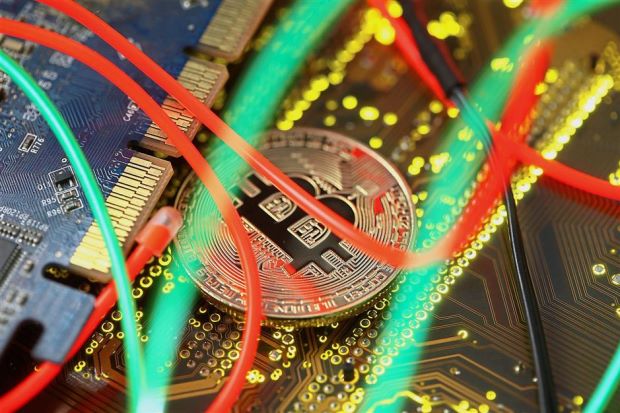
Easing restrictions: A representation of the virtual cryptocurrency bitcoin. The Monetary Authority of Singapore is against clamping down on crypto. — Reuters

 SINGAPORE: Singapore is seeking to cement itself as a key player for cryptocurrency-related businesses as financial centres around the world grapple with approaches to handle one of the fastest growing areas of finance.

“We think the best approach is not to clamp down or ban these things,” said Ravi Menon, managing director of the Monetary Authority of Singapore (MAS), which regulates banks and financial firms.

Instead, MAS is putting in place “strong regulation”, so firms that meet its requirements and address the multitude of risks can operate, he said in an interview.

Nations differ vastly when it comes to how they handle crypto: China has cracked down on large amounts of activity in recent months, Japan only recently allowed dedicated crypto investment funds – though El Salvador has embraced bitcoin as legal tender.

In the United States, while there are an abundance of options for investing in the burgeoning asset class, regulators are concerned about everything from stablecoins to yield-generating products.

“With crypto-based activities, it is basically an investment in a prospective future, the shape of which is not clear at this point,” said Menon, who has helmed the MAS for about a decade.

“But not to get into this game, I think risks Singapore being left behind. Getting early into that game means we can have a head start, and better understand its potential benefits as well as its risks.”

The stakes are high for the small island nation, which has already earned a reputation as a global wealth hub. Singapore must raise its safeguards to counter risks including illicit flows, Menon said.

The city state is “interested in developing crypto technology, understanding blockchain, smart contracts and preparing ourselves for a Web 3.0 world,” he said, referring to the third generation of online services, which will be a key theme during the Singapore Fintech Festival that MAS will host next week.

Menon acknowledged that banks and other financial institutions will face certain challenges with the decentralisation of finance. Still, Singapore wants to be “well positioned” for 2030 when “an economy of tokenisation” may come, he said.

Singapore isn’t the only place with crypto ambitions. Locations as diverse as Dubai, Miami, El Salvador, Malta and Zug in Switzerland, are also making efforts.

It can be a fine line to tread, given the crypto industry grew up with few regulations, so many players balk at government officials’ attempts to impose guardrails.

Singapore’s approach has attracted crypto firms from Binance Holdings Ltd, which has had a series of run-ins with regulators around the world, to Gemini, a US operator targeting institutional investors, to set up base.

Some 170 companies applied for a MAS licence, taking the total number of firms seeking to operate under its Payment Services Act to about 400, after the law came into effect in January 2020.

Since then, only three crypto firms have received the much-coveted licences, while two were rejected. About 30 withdrew their application after engaging with the regulator. 

Among those approved is the brokerage arm of DBS Group Holdings Ltd, Singapore’s largest bank, which is also a pioneer in setting up a platform for trading of digital tokens while offering tokenisation services.

The regulator is taking time to assess applicants to ensure that they meet its high requirements, Menon said. The MAS has also boosted resources to cope with high volumes of prospective services operators, he said.

“We don’t need 160 of them to set up shop here. Half of them can do so, but with very high standards, that I think is a better outcome,” he said.

Menon said the benefits of having a well-regulated local crypto industry could also extend beyond the financial sector.

“If and when a crypto economy takes off in a way, we want to be one of the leading players,” he said.

“It could help create jobs, create value-add, and I think more than the financial sector, the other sectors of the economy will potentially gain.” — Bloomberg

Source link


On top for a third year running | The Star


Related posts:


Representations of cryptocurrencies Bitcoin, Ethereum, DogeCoin, Ripple, Litecoin are placed on PC motherboard in this illustration take...
 

Wednesday, 27 October 2021

Guidance on Cryptocurrency investments, Digital asset exchanges cintinue to thrive in Malaysia

Representations of cryptocurrencies Bitcoin, Ethereum, DogeCoin, Ripple, Litecoin are placed on PC motherboard in this illustration taken, June 29, 2021. REUTERS/Dado Ruvic/Illustration


 Dr Tan says the forum is meant to assist the public with the best investment strategy

 Guidance on investments

Experts to speak on  Cryptocurrency at online forum on Nov 6

TWO experienced financial professionals will share their thoughts and analyses at the ‘Investment and Cryptocurrency’ online forum on Nov 6, 2021.

One of them is German-born Mustafa Aydemir who is a senior investment analyst at Saturna Fund Management Company.

He is one of the fund managers licensed by the Securities Commission Malaysia.

Besides being familiar with conventional financial investment, he is also good at Islamic financial investment.

Another speaker is Edgar ‘Jobe’ Gasper, the chief operating officer of SINEGY involved in digital asset trading, which is legal and approved by the Securities Commission Malaysia.

He has extensive practical experience in digital transactions, blockchain technology and cryptocurrency mining operations.

Both of them will conduct in-depth sharing of investment knowledge at the online forum organised by the Malaysian Financial Planning Council (MFPC) Penang Chapter from 9.30am to noon.

MFPC Penang Chapter chairman Dr Tan Chuan Hong said the forum was meant to assist the general public and retail investors to ride out the pandemic crisis with the best investment strategy.

Citing a report from the Malaysian Institute of Economic Research, he said the Government had been utilising large-scale borrowing to assist civilians and small medium enterprises as well as boost the economy since the country was hit by the Covid-19 pandemic almost two years ago.

“This has resulted in a rising debt ratio.

“Up to June this year, the debt ratio exceeded the statutory 60%, reaching 61.1%.

“This has created a lot of concern on whether Malaysia can rapidly recover from this economic crisis.

“Can our stock market this year perform like it did last year when it soared by more than 10% again in just two months? Or is it the end of the bear market?

“To make wise investment decisions, investors need time to collect and analyse the information cautiously,” he said.

Dr Tan said that many still needed more proper education about cryptocurrency investment.

He said many Malaysians had been scammed and lost their money due to inaccurate information obtained online.

“Cryptocurrency investment is originally a high-risk and high-return investment tool.

“Therefore, investors who are blinded by greed for high returns often suffered huge losses,” he said.

On the same day, MFPC executive director Chung Kar Yin, Universiti Sains Malaysia School of Management dean Prof Dr Noor Hazlina Ahmad and Tunku Abdul Rahman College Penang Branch Campus head Assoc Prof Dr Toh Guat Guan will also hold a brief sharing session.

Participants have to fill in the online evaluation form after the session to obtain a certificate of participation and 3CPDs.

Those interested can register online for free.

The public registration link is https://1st.mfpc.org.my/PublicEventRegistration/302 and the MFPC members registration link is https://1st.mfpc.org.my/.


Source link

Digital asset exchanges continue to thrive

 About 300,000 new accounts created to date

KUALA LUMPUR: Despite market uncertainties following the Covid-19 pandemic, about RM16bil worth of digital assets and cryptocurrencies have been traded in Malaysia between October 2019 and September 2021.

Securities Commission (SC) chairman Datuk Syed Zaid Albar said digital asset exchanges in the country would continue to thrive this year, with about 300,000 new accounts created to date.

“Investor participation in alternative and digital platforms continues to be robust. New digital investment management (DIM) entrants have contributed to the segment’s assets under management growth.

“In fact, compared to last year, our eight licensed DIM holders have opened 90% more DIM accounts from January to July this year,” he said at the SCxSC Fintech Conference 2021.

In addition, Syed Zaid said the increased demand for online brokerage services resulted in close to 35% increase in new accounts opened as of July 2021.

Given the positive developments, he expects the industry to maintain the encouraging growth performance this year.

Meanwhile, Syed Zaid disclosed that equity crowdfunding (ECF) and peer-to-peer (P2P) financing platforms have raised about RM1.3bil since April last year, given the funding needs of micro, small and medium enterprises (MSMEs).

Citing data, he said about RM625mil funds were raised through ECF and P2P in the first half of this year, an increase of 151% and 220%, respectively, from a year ago.

Both platforms attracted young investors, with 60% of participants aged below 35.

Since their inception, 21 ECF and P2P financing platforms have raised about RM2.2bil for nearly 4,000 MSMEs.

Moving forward, the SC said fintech could be the crucial enabler in helping the country to recover as the pandemic had an adverse impact on businesses.

“The SC would seek to drive greater adoption of digital capability to enhance capital formation efficiencies and increase investor participation in the capital market,” added the regulator. 

Source link

 Related:


Mnuchin is investing in blockchain – not crypto | The Star

https://www.thestar.com.my/business/business-news/2021/10/21/mnuchin-is-investing-in-blockchain---not-crypto


Related posts:


Blockchain: Internet of Value/ Currency of Trust; Private cryptocurrency a misallocation among blockchain technology, say research & economist


Blockchain Festival & Conference Week, Kuala Lumpur 26~27 Sept 2018


Jack Ma Embraces Blockchain for Ant But Warns of Bitcoin Bubble


President Xi’s Blockchain Push Triggers Frenzy in China Technology Stocks

Friday, 22 November 2019

Blockchain: Internet of Value/ Currency of Trust; Private cryptocurrency a misallocation among blockchain technology, say research & economist


  • Blockchain embodies the internet of value. How will it revolutionize our lives and our pockets?

  •  And, we look at the qualities Blockchain needs to spark mass adoption.


https://youtu.be/oJGVvJS0A0I

Blockchain, one of the buzzwords in technology, is set to rise in China. Recently, Chinese President Xi Jinping underscored the fledgling technology as the country increasingly views Blockchain as key to future innovation. Has a digital game changer arrived? How will a boom in Blockchain impact our lives? Today we delve into the world of the new technology and talk to Don Tapscott, co-founder and executive chairman of the Blockchain Research Institute, to find out more.

https://youtu.be/DCLqWpXFE2o

Currency of Trust


Blockchain has the potential to be revolutionary. But, what hurdles must it overcome before it can hit the mainstream? In London, we invited Patrick McCorry, founder and CEO of PISA Research, a grant funded by a group of Blockchain companies, to decode this ever-changing world.

https://youtu.be/A2IDapvfUTM


https://youtu.be/41hPRCnUCtI

https://youtu.be/8H-pJ9hs9I4


Private cryptocurrency a misallocation among blockchain technology, says economist

Cryptocurrency is digital-based cash among the internet world nowadays. Born from blockchain, this kind of "currency" is blooming in terms of high privacy. Acknowledging that, Nobel Prize-winning economist and Harvard professor Eric Maskin commented that private cryptocurrency is a misallocation.

"The most important application of blockchain so far has been cryptocurrency, and that is a terrible misallocation. In my view, cryptocurrency, at least private cryptocurrency like bitcoin is a mistake," said Maskin.

"Because the public currency like RMB and U.S. dollar are much more useful than private currency. [Public currencies] they preserve the power of central banks to conduct monetary policy. If no one is using the dollar, then the U.S. monetary policy is useless. So I'm worried about cryptocurrency only to the extent that it reduces the use of currencies like RMB or dollar," he added.

He also pointed out that cryptocurrencies could interfere with central banks' monetary policies.

Meanwhile, Maskin supports the idea that blockchain is a technology. He noted that it is one of the exciting developments that have come along in recent years.

"Blockchain can make all sorts of transactions much easier and much more secure. It can also ensure that only the information that people need to have gets transmitted," said Maskin.

"Blockchain is a way for me to guarantee that only what you need to about me gets told. And that's valuable in a world where we're beginning to worry about privacy issues," the professor explained.

Besides, Maskin supports building the country's own digital currencies. With the backdrop of e-payment booming around the world, Maskin said the digital currency can make transaction easier but it won't have all of the unpleasant side effects of these private currencies.

Source link


Read more:

Blockchain with Chinese characteristics


Friday, 11 January 2019

Pushing blockchain revolution

(From left) World of Sharing business development manager Ice Wong, EUNEX (Asia) marketing director Kyan Lee, MBAEX chief executive officer Sebastian Ionut Diaconu, Lim, International Blockchain Research Club vice-president Sunny Chao and blockchain technology company Milletique OTO Distribution senior manager Jasmond Ng posing at Fintech Blockchain Summit in Kulim, Kedah

OVER 2,000 blockchain enthusiasts and leaders shared the latest ideas at Fintech Blockchain Summit which was held in Kulim, Kedah.

The summit themed ‘Blockchain Era, Connecting Future’ explored the potential of blockchain technology in various economic fields.

Delegates discussed blockchain trends and evolution to various platforms and digital assets.

Held at MBI Desaku Multi-function Convention Centre, the summit was jointly organised by World Crypto Organisation, Makefamous Creative Hub Sdn Bhd, Milletique OTO Distribution Sdn Bhd, Mightficent Global Sdn Bhd, Menbridges Academy Sdn Bhd and Macsintec Social Media Sdn Bhd.

Among those attending the summit was Super Minor Community vice-president Nicholas Lim who is also Chainverses magazine chief editor.

“Various groups joined us at the summit to contribute to the progression of financial technology through discussions and sharing sessions.

“We hope this summit will open up greater opportunities for development,” Lim said.

Lim opined that blockchain had good concepts and ideas.

However, he said the biggest resistance in the current blockchain development was the lack of economic support in terms of adoption.

“To overcome this, we need teamwork, good practical solutions and support from the community to push the adoption of blockchain in the country forward,” he added.

During the summit, four groups signed an MoU, including International Financial Technology Academy, Linton University College, Milletique Technology and Menbridges Academy.

The MoU aimed to promote blockchain financial technology through education with the hope of cultivating more blockchain experts in the future.

By emilia ismail The Star


Related posts:

Blockchain Festival & Conference Week, Kuala Lumpur 26~27 Sept 2018

Jack Ma Embraces Blockchain for Ant But Warns of Bitcoin Bubble


Bitcoin, digital currencies rally, caution prevails; virtual currency in property


BLOCKCHAIN beyond Bitcoin


What is Blockchain Technology, its uses and applications?


Bitcoin must not in your retirement financial planning portfolio


From Industrial 4.0 to Finance 4.0

Monday, 10 September 2018

Blockchain Festival & Conference Week, Kuala Lumpur 26~27 Sept 2018

BLOCFEST www.blocfest.asia

SOUTHEAST ASIA’S INTERNATIONAL BLOCKCHAIN EVENT

Blockchain and beyond

Brothers Hway (left) and Tze-Co say networking will be a big part of the Blocfest conference. — ART CHEN/The Star

Educate yourself on blockchain technology which is transforming businesses around the globe.

What began as an experiment in buying Bitcoin for a holiday led two brothers to explore blockchain technology and eventually organise a blockchain conference – Blocfest 2018 – which will feature more than 30 ­international speakers.

Gwei Tze-Co, 49, started investing in Bitcoin four years ago, ahead of a trip to Brazil to attend the 2014 World Cup.

“I was planning to go to Argentina after the World Cup and read that the currency situation was so bad there that you could use Bitcoin instead. I bought some but didn’t end up using it,” he says.

But that initial investment got him hooked on blockchain and cryptocurrency, especially Ethereum.

Meanwhile, Gwei Hway, 43, who is a ­programmer and has worked in tech firms for the last 20 years, was drawn to ­blockchain and cryptocurrency because of his brother’s fascination for them.

Tze-Co says in Malaysia blockchain is still an emerging technology though a few good projects by local founders have been launched.

“However, lots of people just use blockchain and cryptocurrency for hype. To put it bluntly, there’s a lot of scams and many Malaysians are falling for them,” he says.

He says that a conference with legitimate speakers sharing their experience could go a long way in educating people on how blockchain can make a difference in their businesses.

He adds that once a person better understands blockchain technology and especially how it’s used in business, it will be easier for him or her to identify the fake ones.

This is one of the reasons the brothers are organising Blocfest through their company, Blockchain Asia Sdn Bhd, which is scheduled to take place at the Shangri-La Hotel, Kuala Lumpur, on Sept 26 and 27.

The two-day conference will focus on the potential of blockchain technology in South-East Asia and feature speakers from various ­backgrounds, including ­blockchain entrepreneurs, developers, global investors, academics and ­enthusiasts.

Discussions at the conference will be divided into three streams – Regulatory, Academic and Enterprise.

Regulatory will help you understand the current regulatory landscape and what’s in store in the future for blockchain; Academy will tackle academic concepts and their impact on blockchain; and Enterprise will highlight technological aspects of blockchain and potential use-case scenarios.

Hway expects half the attendees to come from enterprises which aren’t too familiar with blockchain technology but are exploring how it could be relevant to them, while the remaining will be investors, academics and experts in the field.

“Networking is definitely a big part of the conference, and as many solution providers will be present in the exhibition halls, we expect a lot of companies to ink deals or find partnerships,” he says.

Joining the conversation will be ­regulators from countries that have begun to explore the issue, including Taiwanese Member of Parliament Jason Hsu, better known as the Crypto Congressman due to his staunch ­support for the technology, and a ­representative from the Philippines’ Cagayan Economic Zone Authority which spearheads the country’s financial ­technology efforts.

Tze-Co says there have been talks to get Malaysian regulators to ­participate and share their thoughts on the laws required to facilitate blockchain in Malaysia but the discussion is ongoing.

Other key speakers that will be at Blocfest are cryptofinance ­platform Fusion’s founder Dejun Qian, blockchain veteran and ProximaX Ltd founder Lon Wong, anti-counterfeit system Wabi’s CEO Alexander Busarov, and dating marketplace Viola.AI’s CEO Violet Lim.

In addition to Blocfest, ­attendees can also take part in several other events during the KL Blockchain Week, which will be held between Sept 24 and 27, including a ­hackathon.

Those interested in attending Blocfest can get 40% off VIP ­tickets priced at US$450 (RM1,860) or normal ­tickets priced at US$375 (RM1,550) by keying in the promo code BLOC40D ­during checkout but this offer is only ­available for a limited time. Visit www.blocfest.asia for more ­information.

Credit:Qishin Tariq The Star online


Related:

Penang lacks quality manpower and talent shortage


Citigroup plans safer way to trade cryptocurrencies by issuing receipts


Related posts:

BLOCKCHAIN beyond Bitcoin


What is Blockchain Technology, its uses and applications?


From Industrial 4.0 to Finance 4.0


Bitcoin, digital currencies rally, caution prevails; virtual currency in property


Jack Ma Embraces Blockchain for Ant But Warns of Bitcoin Bubble