Pages

Tuesday, 16 December 2025

Malaysia PM Anwar makes sweeping Cabinet changes, including new trade and economy ministers

 The premier announced more than 25 changes to his Cabinet after previously saying that a major reshuffle was not on the cards.

Anwar Announces 28 Appointments, Portfolio Changes


Malaysia Prime Minister Anwar Ibrahim shows a list of his Cabinet appointments after announcing a reshuffle on Dec 16, 2025. (Photo: Prime Minister’s Office of Malaysia/Afiq Hambali)

KUALA LUMPUR: Malaysian Prime Minister Anwar Ibrahim announced sweeping changes to his Cabinet on Tuesday (Dec 16), ending weeks of speculation over ministerial vacancies.

Notable changes - among more than 25 announced - include the appointments of United Malays National Organisation (UMNO) stalwart Johari Ghani as the new Investment, Trade and Industry Minister and Parti Keadilan Rakyat’s (PKR) Akmal Nasir as Economy Minister. There are 65 Cabinet posts in total. 

Johari was previously Minister for Plantations and Commodities while Akmal was Deputy Minister of Energy Transition and Water Transformation. 

A composite image of newly-appointed investment, trade and industry minister Johari Ghani (left) and economy minister Akmal Nasir (right). (Photos: Facebook/Johari Abdul Ghani, Facebook/Akmal Nasir)

During the internal PKR polls in May, Akmal was seen as closely aligned to Rafizi Ramli, who resigned as Economy Minister after he was defeated by Anwar’s daughter Nurul Izzah in a contest to be the party’s deputy president. 

UMNO is an ally of Anwar’s Pakatan Harapan (PH) ruling coalition, and the investment, trade and industry portfolio was previously held by Tengku Zafrul Aziz, who was an UMNO member before leaving the party to join the prime minister’s PKR. 
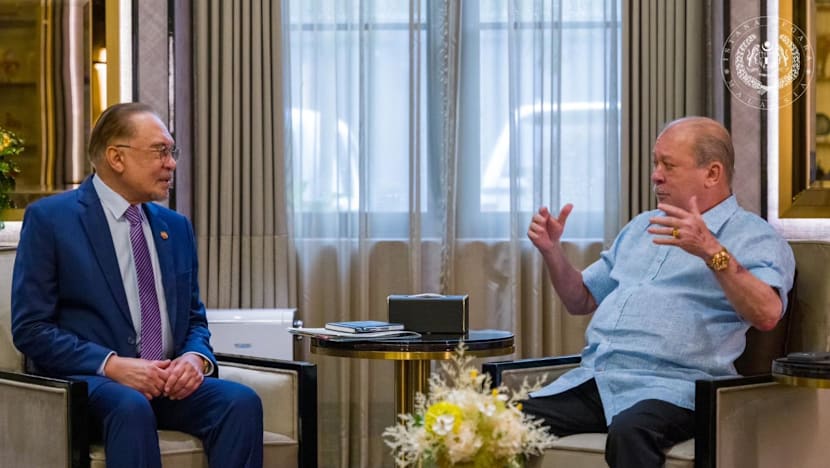
Malaysia Prime Minister Anwar Ibrahim held a meeting with Malaysian king Sultan Ibrahim Sultan Iskandar at Istana Bukit Tunku in Kuala Lumpur on Dec 16, 2025. (Photo: Facebook/Sultan Ibrahim Sultan Iskandar)

Speaking at the start of the press conference before he announced the changes, Anwar said: “There is a need to make some changes so that we have a Cabinet that works as a team, to focus on achieving higher economic growth and solving people's problems.” 

He had met the king Sultan Ibrahim Sultan Iskandar on Tuesday morning, and said in a Facebook post in the afternoon that he would make an announcement on the Cabinet at 3.30pm that day.

Among the changes he announced, Arthur Josep Kurup of the United Sabah People’s Party was appointed Natural Resources and Environmental Sustainability Minister, PKR vice-president R Ramanan was appointed Human Resources Minister while head of UMNO women’s wing Noraini Ahmad was appointed Minister for Plantations and Commodities. 

Democratic Action Party’s (DAP) Hannah Yeoh was reassigned from her Minister for Youth and Sports portfolio to be Minister in the Prime Minister’s Department (Federal Territories), with PKR’s Taufiq Johari taking her place.   

PKR’s Mustapha Mohd Yunus Sakmud was appointed Minister for Sabah and Sarawak while DAP’s Steven Sim was reassigned from his Human Resources portfolio to be Minister for Entrepreneur Development and Cooperatives. 

Senator and Islamic scholar Zulkifli Hasan was appointed Minister for Religious Affairs. 

The changes to Anwar’s Cabinet - including full minister and deputy minister positions - saw some members being reassigned while others were new appointments. 

Full ministers who were dropped completely from the line-up included PKR’s Zaliha Mustafa who was Minister in the Prime Minister’s Department (Federal Territories) and Minister for Religious Affairs Mohd Na’im Mokhtar. 

Na'im's exclusion was a surprise as he was sworn in as a senator for a second term on Dec 3. 

Notably, Malaysia's Education Minister Fadhlina Sidek retained her post despite facing criticism for her perceived lack of action and slow response on serious school issues like bullying, with student deaths triggering public outcry for her to resign. 

Earlier this month, three ministers were also sworn in as senators for a second term. Besides Na'im, they included Home Minister Saifuddin Nasution Ismail and Higher Education Minister Zambry Abdul Kadir. 

A minister in Malaysia must be an elected member of parliament (MP) in the lower house or an appointed senator in the upper house. 

On Dec 1, Anwar had said that a major reshuffle of his Cabinet is not on the cards, noting that his administration will “only function for a year plus” as Malaysia’s next general election is due by February 2028. 

However, there was speculation that changes to his Cabinet were imminent, with Tengku Zafrul stepping down from his Investment, Trade and Industry Minister portfolio earlier this month, creating a fourth ministerial vacancy. 

Tengku Zafrul had served for two terms as a senator since 2020. He held the trade minister post throughout his term in the Senate, which is the maximum period allowed.

Nik Nazmi Nik Ahmad had resigned as the Natural Resources and Environmental Sustainability Minister in May, while Ewon Benedick resigned as the Entrepreneur Development and Cooperatives Minister in November, ahead of the Sabah state elections.

Ewon had resigned over disagreements with the federal government on issues related to Sabah’s 40 per cent entitlement of federal net revenue derived from the state. 
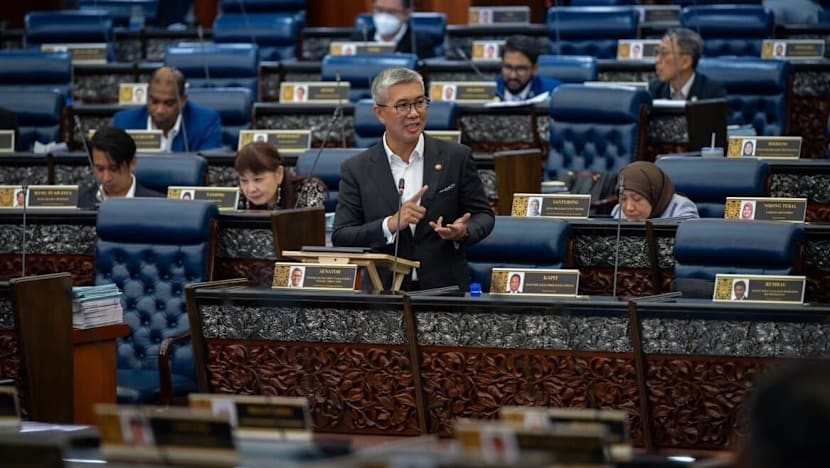
Former trade minister Tengku Zafrul Abdul Aziz on his last day in the Dewan Rakyat. (Photo: Instagram/@tzafrul_aziz)

Meanwhile, like Rafizi, Nik Nazmi had resigned following defeat in party elections within PKR.

Second Finance Minister Amir Hamzah took over the economy portfolio in the interim while Johari Ghani helped to handle natural resources and environment sustainability.

Ewon’s former portfolio was being managed by works minister Alexander Nanta Linggi starting Dec 3, local media reported.

Monday, 8 December 2025

Plaque in the neck, Cleaning out the carotid artery


Cleaning out the carotid artery

A carotid endarterectomy is a surgical procedure to remove plaque from this important artery that supplies the brain, without which, a stroke could occur.

A STROKE occurs when an artery that carries oxygen and nutrients to and within the brain is either blocked by a clot or bursts.

The most common type is an ischaemic stroke, which is caused by a blood clot or fatty deposits (plaques) blocking or narrowing an artery (resulting in stenosis).

Meanwhile, an haemorrhagic stroke occurs when a blood vessel in the brain leaks or ruptures.

Sometimes, there may only be a temporary disruption of blood flow to the brain.

This is known as a transient ischaemic attack (TIA), where symptoms are momentary and resolve on their own in a few minutes, or at most, within 24 hours.

The symptoms – similar to a stroke – include sudden numbness or weakness in the face, arms or legs on one side of the body, trouble speaking, vision problems in one or both eyes, dizziness, and loss of balance resulting in a sudden fall.

Often referred to as mini stroke, a TIA is actually a warning sign of a future stroke, but because the symptoms are brief, people usually just shrug them off.

A shocking discovery

This is what happened to Indonesian businessman Eddy Giantono, 74, who experienced sudden weakness on his left arm, but felt fine subsequently.

He thought nothing of it, but mentioned the incident in passing to his family members.

While Eddy is not a smoker, he has been on medications to manage his high cholesterol, high blood pressure and diabetes for the past 20 years.

In addition, he suffered a heart attack 12 years ago and had to undergo heart bypass surgery.

Due to his medical history and noting that he was getting weaker, his family immediately took him to consult a doctor in Yogyakarta, where they live.

“The doctor said I had suffered a mild stroke (TIA) and there were many blockages in my carotid arteries (blood vessels that extend from each side of the neck to the skull).

“He recommended putting stents in, but since my heart bypass surgery was performed in Penang, I decided to seek a second opinion there as I have more confidence in the Malaysian healthcare system.

“Here I was told both my carotid arteries were blocked by 95% and 75% respectively, and I needed surgery.

“My doctor then referred me to another private hospital in Klang, Selangor,” recalls Eddy in a recent interview.

Removing the plaque

Treatment options to treat a blocked carotid artery depend on the severity of the blockage.

They typically involve a combination of lifestyle changes, medication, and medical procedures or surgery.

A blockage in the right carotid artery primarily affects the left side of the body.

This is because the brain has a “crosswired” structure, meaning the right side of the brain controls the left side of the body and vice versa.

As Eddy was a high-risk patient, he was advised to do a carotid endarterectomy on the right side.

As the block in the left carotid artery had not caused any symptoms, his doctor, consultant vascular and endovascular surgeon Dr Yow Kuan Heng, decided to take a wait-and-see approach.

A carotid endarterectomy involves making an incision in the neck, opening the carotid artery and physically removing the plaque build-up before the artery is stitched closed, often with a patch to widen it.

“Initially, my father wanted to postpone the operation as I was getting married, but the surgeon firmly said no as he was in danger of getting a stroke that could be fatal.

“So although he is a stubborn man, he had no choice but to agree,” says daughter Anatasya Giantono.

The surgery, carried out in August, was successful, and Eddy was already walking the next day, determined to go home as he didn’t want to change Anatasya’s wedding date.

“Even when he was in the intensive care unit, he insisted on being discharged,” she says, laughing.

“He gets homesick easily and doesn’t like being away for long periods.”

A week after he returned home, Eddy proudly walked his firstborn down the aisle. No one could tell he had recently undergone a complicated surgery.

Today, Eddy says he is “sihat sekali” (very well) except for speaking with a

slight lisp, which Dr Yow has said will normalise in time.

The surgical scars at his neck are fading fast and he has resumed his normal routine.

Thanks to early intervention, Eddy was most likely saved from a major stroke in the nick of time.

Get assessed quickly

Atherosclerosis – the thickening or hardening of the arteries caused by a build-up of plaque in the inner lining of an artery – can affect almost any artery in the body, including those in the heart, brain, arms, legs, pelvis and kidneys.

If the build-up is in the neck, it is called carotid artery disease; in the heart, it is coronary artery disease, in the leg, it is peripheral artery disease, etc.

According to Dr Yow, carotid stenosis from narrowing in the neck area is the fastest rising cause of ischaemic stroke in the world, particularly in the Asian region.

“Traditionally, doctors from this region felt that most strokes were happening in the skull, but that pattern has now changed due to the diabetic pandemic.

“The risk of a stroke is greatest when the narrowing in the neck is higher than 50% (classified as critical carotid stenosis).

“If there is a major stroke, you need drugs to break up the clot, but for TIA, you need to see a vascular surgeon as soon as possible to get assessed by scans,” he says.

A TIA is usually an indication of an unstable plaque in an artery supplying the brain, which can rupture at any time and cause a blood clot to form.

This clot can then break off, travel to the brain and block blood flow, leading to a stroke.

“It is important for the public to know that carotid endarterectomy is the firstline treatment for symptomatic carotid stenosis.

“In surgery, you immediately clamp the artery before opening it up, but in stenting, you have to push a guided wire through a hot zone of clot.

“That process, even with protection devices or filters, has a higher rate of stroke than surgery,” explains Dr Yow.

He adds: “In Eddy’s case, after discussions with my multidisciplinary team, we decided to operate only on the side that was symptomatic because he has moderate heart failure.

“Since he had no symptoms on the left side, we didn’t touch it.

“If he develops symptoms in future, then we have to think about surgery.”

He emphasises that physiotherapy must be done as soon as possible after surgery, and on average, patients are discharged from hospital by day three.

A repeat scan of the repaired carotid artery is carried out six weeks after surgery.

So, if you experience a TIA, head to the doctor as soon as possible and request for a carotid artery ultrasound or computed tomography (CT) angiography.

Don’t delay as every minute can make a difference.

The Star Malaysia
By REVATHI MURUGAPPAN starhealth@thestar.com.my


Related article:

24 Jul 2025 — Carotid artery disease occurs when fatty deposits, called plaques, clog the blood vessels that deliver blood to the brain and head (carotid ...
carotid artery disease from www.mayoclinic.org

Saturday, 6 December 2025

End of era for iconic Penang festival

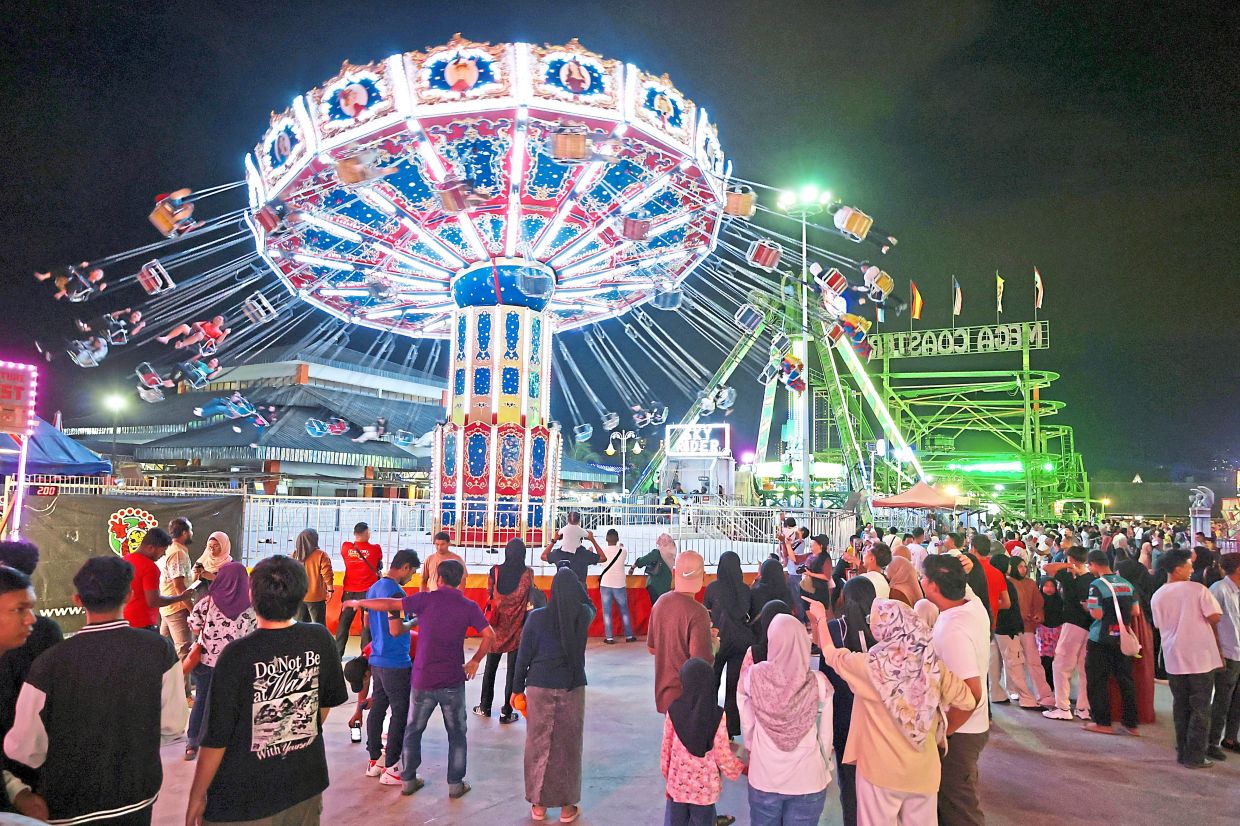
The Sungai Nibong venue has become synonymous with the festival, drawing families during the year-end school holidays. — CHAN BOON KAI/The Star

PESTA Pulau Pinang is taking place one last time at its Sungai Nibong home before the site is taken up for the Mutiara Line Light Rail Transit (LRT) project.

The month-long festival, which runs from today until Jan 10, will not be held in following years as the land is scheduled to be handed over to MRT Corp in June for the building of the LRT depot and station.

Penang tourism and creative economy committee chairman Wong Hon Wai said there was no alternative venue ready and setting one up would require major infrastructure.

“Pesta will not be continuing in the interim as no alternative site has been identified,” he said.

“We understand that the Prime Minister has said the iconic festival should continue, but we have no site for now.

(Below) The scene at last year’s Pesta Pulau Pinang. — Filepic(Below) The scene at last year’s Pesta Pulau Pinang. — Filepic

“As such, this year will be the last Pesta until the Mutiara Line is completed.”

Wong said the state might bring the event back to Sungai Nibong after 2031, though in a reduced format due to space constraints.

“Replicating what we have here from scratch would take time and substantial investment.

“So, instead of shifting to a temporary site that may not be suitable, the state has decided to pause Pesta and possibly return once the LRT is ready,” he said.

He said the state was open to ideas of relocating the festival to Seberang Perai, but there were no concrete plans yet.

“Any move must ensure Pesta remains accessible and attractive to families from both the island and mainland,” he added.

Wong’s remarks followed earlier announcements that the Sungai Nibong grounds would be partially absorbed into the Mutiara Line LRT project as a station and supporting facility zone.

The LRT line is expected to be completed in 2031.

This marks the longest pause in the festival’s history.

Pesta Pulau Pinang began in the late 1960s as a year-end state fair to promote tourism and community activities.

It moved across various venues before settling in Sungai Nibong in the early 1970s.

Since then, the venue has become synonymous with the festival, drawing families from across Penang and the northern region during the year-end school holidays.

Prime Minister Datuk Seri Anwar Ibrahim had earlier said the fair held sentimental value and the takeover should be handled with care.

Wong said the state’s long-term plans aligned with that view.

“We are not scrapping Pesta. Construction must take place and once the LRT is completed, we could bring it back within the new site’s layout,” he said.

This year’s edition of the festival features concerts, rides and cultural showcases.

According to Pesta Pulau Pinang deputy manager Nuar Rizal Kamarudin, one of the highlights is the new Air Force ride, imported from Italy, and is suspended about 30m in the air.

“It joins the Kids Roller Coaster, Euro Wheel, Vortex, Sky Rider and Daytona rides.

“There are 17 game booths this year, with prizes like toys and teddy bears,” he said.

Daily concerts will feature popular Malaysian acts including Datuk Awie and Ella.

“We have multiple sought- after musical acts every night.

“This is a big deal, as it is rare that one has the opportunity to witness such acts for a mere RM5 entry fee,” said Nuar Rizal.

Other activities include silat and muay thai demonstrations, e-sports tournaments, a Bollywood night, colouring contests, a boria showcase and boxing matches.

Food-wise, there are 20 food trucks, 40 stalls and five kiosks serving Thai cuisine.

“We even have some surprises in store for our visitors, as we want to celebrate this final Pesta here,” said Nuar Rizal.

Pesta Pulau Pinang is open daily from 5.30pm to midnight.

Entry is RM5 for Malaysian adults and RM10 for foreigners. Children aged 12 and below enter free.